7 Lessons from the Journey of Leaving Corporate America
This post is based on the latest episode of the Founded with Soul podcast. You can watch the full conversation here: How My Wellness Journey Helped Me Leave Corporate America.
Is the corporate climb costing you your well-being? In this episode, we sit down with Alana Kane, founder of Mudra Marketing Group, to unpack her 11-year evolution from a burnt-out employee to a thriving SEO Marketing Expert and founder.
Alana shares how she learned to listen to her nervous system to pivot away from the cubicle and build a sustainable agency. Now, she’s paying it forward by equipping aspiring entrepreneurs with the DIY tools they need to stay visible—minus the marketing burnout.
Welcome to a very personal, very raw, and very authentic post on how Alana’s wellness Journey and her nervous system gave her the courage to leave a suffocating life in Corporate America, to start a business that supports her life.
This is not a how-to guide. It’s a personal recollection of lessons she learned through 11 years of building a life on her terms and starting a business as an SEO marketing expert, away from societal expectations.
Now let’s dive in.
Table of contents:
➡ LESSON 1: How Your Anxiety Is The Catalyst Of Change and Self-Discovery
➡ LESSON 2: Going Inward is the Key
➡ LESSON 3: The Identity Trap: Unlearning “The American Dream”
➡ LESSON 4: Don't Take Advice From People Who Aren't Living the Life You Want
➡ LESSON 5: Leaving Corporate with a Mission
➡ LESSON 6: Your Business Should Support Your Life, Not Replace Your Corporate Burnout.
➡ LESSON 7: The Universe Will Make You Listen (One Way or Another)
➡ Final Thoughts: What It Actually Takes To Leave Corporate America
LESSON 1:
How Your Anxiety Is The Catalyst Of Change and Self-Discovery
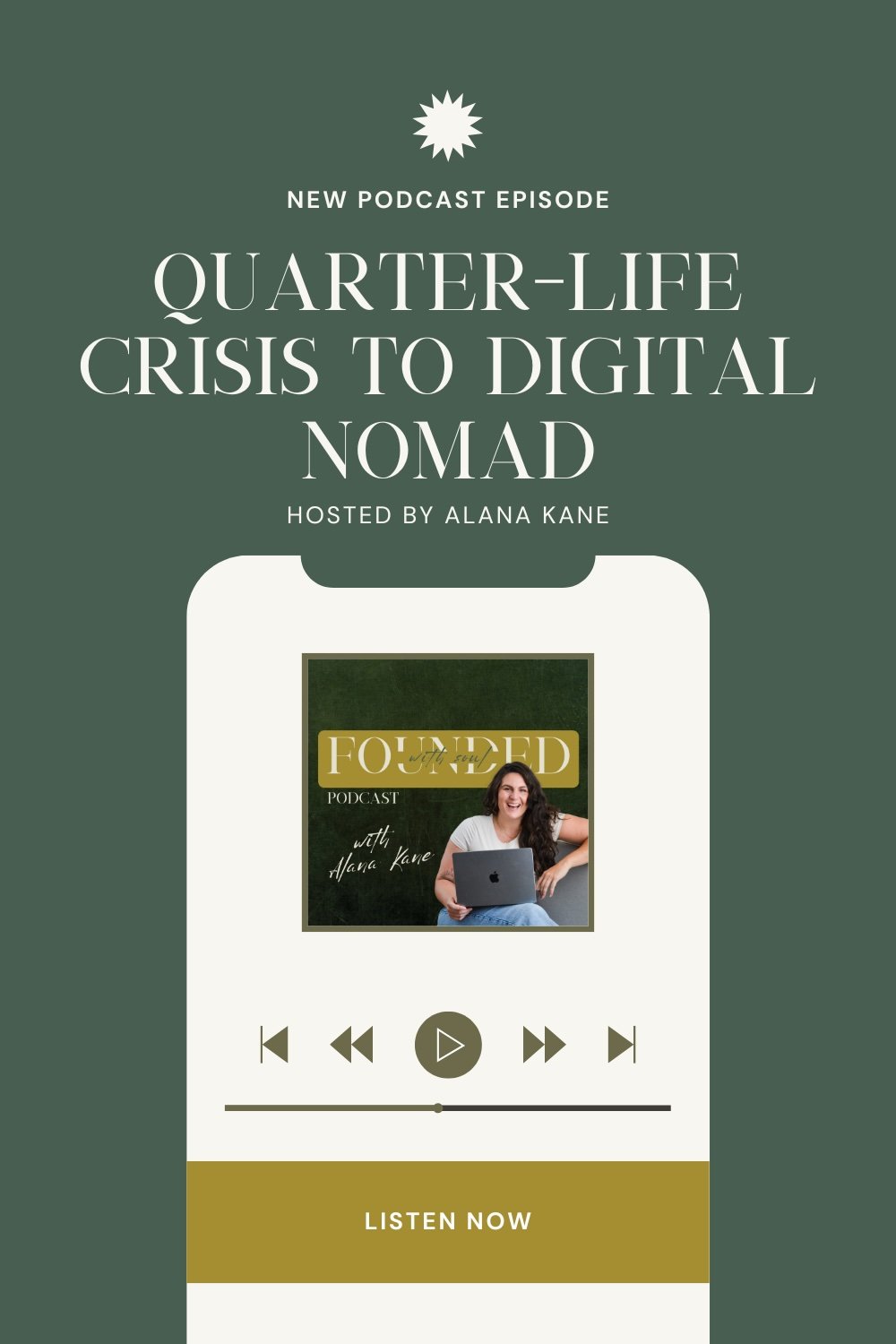
Experiencing crippling anxiety changed everything for Alana.
You know how the story goes: a solid corporate role, a steady income, and a career you’ve worked hard to build. But in your body, something is clearly wrong. The anxiety, the constant tension, the fidgeting in boardrooms, the shallow breathing, the feeling of being trapped in a life that no longer fits. This was Alana, and it might be you, too.
While anxiety sucks, it’s also a sign. It’s a call to dive deeper and understand why it’s happening.
Big change is rarely a matter of will, but rather the result of a collision with reality. Alana’s wellness journey didn’t start as a plan to quit her job or build a business; it started as a way to understand why her body was pushing back against a life that looked “successful” but felt deeply misaligned and wrong.
Anxiety is not a disorder anymore, but a powerful dashboard light, a messenger that tells you to start paying close attention to your life, and brings focus to where you’re abandoning yourself.
I just hit a point where I was so anxious I couldn't sit still for longer than 10 minutes. Being in a meeting was horrible. I was like fidgeting, sweating. All I could think about was, are people looking at me? Are people noticing? And that was my mental track all the time. And so it got to the point where I didn't even want to go out and see my friends. So I got depressed, and I was medicating with alcohol.
The wellness industry loves to talk about self-care and boundary-setting, but rarely acknowledges the systemic reality: the current corporate structures are not designed to protect your nervous system. They're designed to extract productivity. And that clashes with highly sensitive people.
Now, expecting the system to change so you can feel better is like expecting a treadmill to stop itself. Changing jobs or moving companies will not solve anything; in fact, they will make it worse.
So if your body is screaming at you—through anxiety, insomnia, chronic stress, or that feeling of being trapped in your own skin—it's not asking you to try harder, or just move places. It's asking you to try differently.
If you’re a high achiever, this is what happens when you override your body's signals for too long. When you take the promotion, even though something feels off. When you medicate with busyness, alcohol, or the promise that it'll get better once you prove yourself. When you're so focused on what you're “supposed” to want that you can't hear what you actually need.
Anxiety is an invitation to go inward and deepen the relationship with yourself to understand your true wants and needs.
LESSON 2:
Going Inward is the Key
Most people don’t stay in Corporate America because they love it. They stay because they’ve never questioned the framework they’re operating inside.
Alana didn’t wake up one day and decide to leave corporate life. What began to unravel first was the internal narrative that told her what a “good life” was supposed to look like. Titles. Stability. Salary. Approval. The quiet promise that if you keep going, it will eventually feel worth it.
Going inward disrupted that story.
When you slow down long enough to hear your own thoughts without the constant reinforcement of meetings, metrics, and expectations, uncomfortable questions surface. Why am I doing this? Who am I doing it for? Would I choose this if no one was watching? These aren’t questions corporate culture encourages — because once you ask them honestly, compliance becomes difficult.
Alana’s internal work wasn’t about fixing herself so she could perform better in the same system. It was about noticing how much of her identity had been built around external validation. Productivity as self-worth. Achievement as safety. Busyness as belonging.
Corporate environments are powerful because they provide structure and certainty, but with it comes a myriad of trade-offs, like stress, anxiety, and burnout.
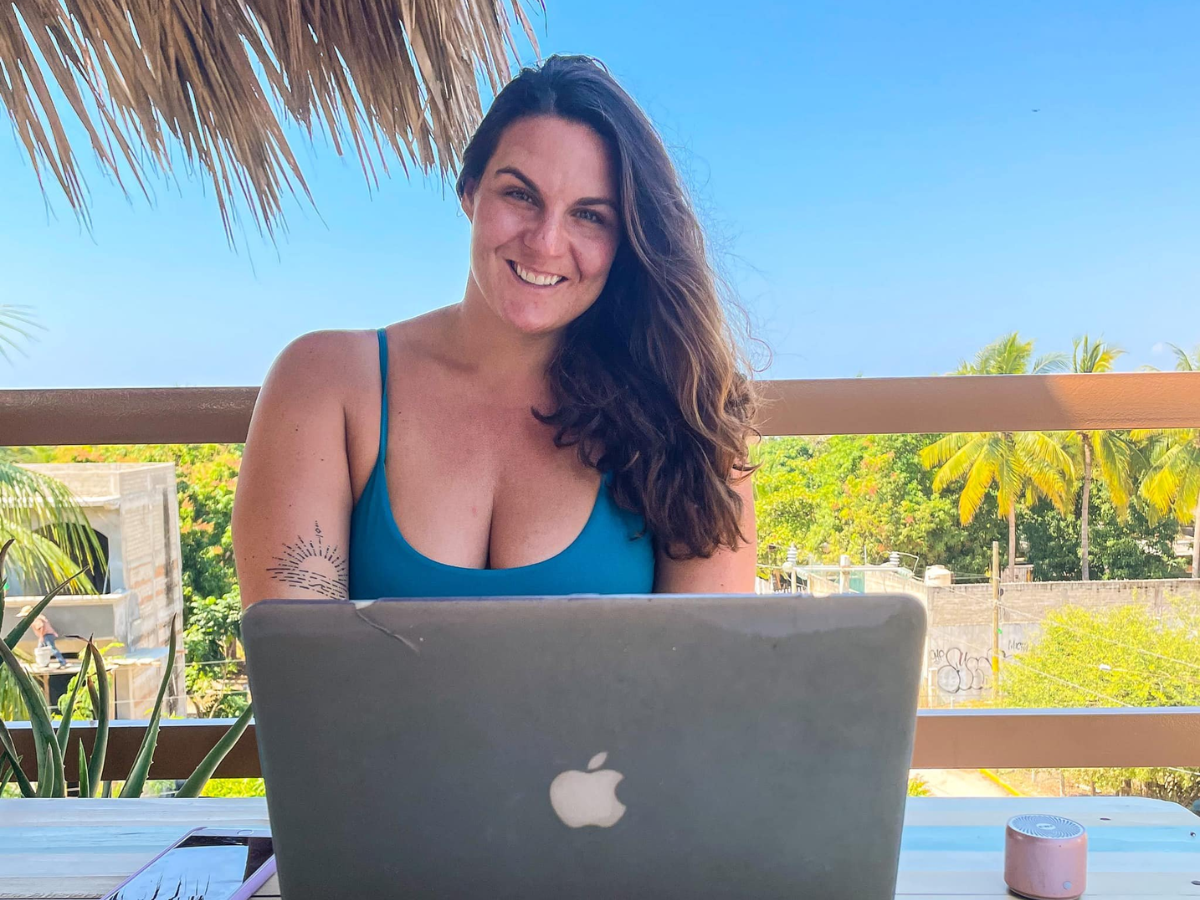
As Alana spent more time alone with herself, mainly through her yoga practice, she began to distinguish between the life she was living and the life she actually wanted. The gap between the two became impossible to rationalize away.
Leaving corporate life wasn’t a dramatic rebellion. It was the natural outcome of inner clarity.
When you reconnect with your inner compass, you stop negotiating with yourself. You see which parts of your life are inherited, which are habitual, and which are chosen. And once you see that clearly, staying where you are requires more energy than leaving.
Going inward doesn’t tell you what to do next.
It tells you what you can no longer pretend is working and strengthens your conviction to chase your dreams.
LESSON 3:
The Identity Trap: Unlearning “The American Dream”
Once you start connecting with your inner compass, you begin rebuilding “who you are”. There’s an identity loss that comes with this journey. It’s realizing that the persona you've spent years building—the one that created the foundations of your life, gave you structure, validation, and a sense of who you are—might be the very thing keeping you stuck in anxiety, and a life that you’re not happy with.
This is the quiet crisis no one talks about when they talk about entrepreneurship, and spoiler alert, it’s a lot more common than you think.
Also known as “corporate dysmorphia,” it is what happens when you mistake who you are, from what you do. It normally happens before you quit, before you launch, and most of the time even before you fully admit to yourself that you're unhappy. It's the identity trap, and if you're reading this, you've probably felt it.
One of the first questions Americans ask each other when they meet is, “What do you do?” It’s heavily defined in our culture to be your career.
Athletes understand this better than most, which was the start of Alana’s quarter-life criss. When you've dedicated your entire life to a singular pursuit measured by results, productivity, and accomplishments, to arrive somewhere —a sport, a career, a specific role— and then you finally arrive at the finish line, you don't just lose the thing itself, the career, the partner, the daughter. You lose the framework for understanding yourself and your purpose in life, along with your self-worth.
This is Alana talking about the end of her swimming career.
"That's your identity. And you have to create a whole new relationship to everything in your life, to what you're eating, to your sleeping, to your exercise schedule... And so you also need to remember that you're not going to be seeing your teammates every day. Like this is your family.
Corporate life works the same way. You become the role: the marketing manager, the director, the rising star. Your calendar and outcomes dictate your worth. Your title validates your existence. And when you start questioning whether this is actually what you want, you're not just questioning a job—you're questioning who the heck you are.
The trap isn't that you chose wrong; it’s our culture in America. We grew up with the idea of “The American Dream.” You go to college, get a job, stay there for 50 years, buy a house, raise a family, and live happily ever after. The problem is, times have changed and “The American Dream” is now riddled with chronic stress, fatigue, and antidepressants.
And with a culture that puts work first, it can be hard to escape that identity.
If you're feeling this tension—the gap between who you've been and who you're becoming—congratulations. You are waking up to the fact that you need to start taking steps on other direction.
LESSON 4:
Don't Take Advice From People Who
Aren't Living the Life You Want
Most Advice Is Fear in Disguise:
People give advice based on what they were too afraid to try
Concern often masks projection
Listening to people who’ve never done the thing creates unnecessary doubt
Advice without lived experience is commentary, not guidance
When you tell people you're thinking about doing something unconventional—like leaving a stable job, traveling solo, or starting a business—their fear will sound like concern. And it’s hard to field the advice from the people you care about most.
Alana talks about it in this podcast episode: "Literally everyone told me I was crazy. Everyone in my life I told, they're projecting their fear onto me. Because aren't you nervous? Aren't you scared? Isn't it dangerous? It's all these people who have never left Pennsylvania or traveled internationally that are telling me all these things."
The loudest voices are often the least qualified to guide you. People who have never left their hometown will tell you traveling alone is dangerous. People who have never owned a business will tell you it's irresponsible and uncertain. People who stayed in jobs they hated will tell you to be grateful for what you have and stop living on cloud 9. They will find all the cases they can list of people who tried and failed, or point you towards the worst-case scenario.
Their advice isn't wisdom—it’s projection. They're not telling you what's possible—they're telling you what they were too afraid to try. When you want to leave corporate, most advice is fear in disguise.
This matters when you're building a business because everyone has an opinion about what you should do: how to market, what to charge, and when to scale. These are the normal questions everyone has at the start.
But we’re all unique, we all have a different set of values, energy levels, commitments. And what worked for them won’t work for you. When you try to fit into a mold, you will most certainly fail and burn out.
Most of that advice out there comes from “personal brands” that now have big teams, budgets, and infrastructure. It's not designed for you if you’re getting started. That’s why Mudra Marketing is all about giving you the tools so you can build personal ownership with your marketing.
If you're going to make big decisions—the kind that redefine and shake your life—surround yourself with people who have done it. Find the ones who left. The ones who built something. The ones who know what it costs and did it anyway.
This is what Founded with Soul is all about.
LESSON 5:
Leaving Corporate with a Mission

Leaving Without Intention Just Recreates Burnout
Build a business intentionally, not impulsively (Even if you cannot wait to get out). Burnout will continue to happen if you’re not honoring yourself.
This is true for selecting the right clients/partners/vendors, taking projects just for the money, and making decisions out of fear.
Alana’s wellness and entrepreneurship journey started at 25 and lasted 11 years. It’s called a journey for a reason. Intention matters more than speed. There's a difference between leaving because you're running away and leaving because you're running toward something. Both can look the same from the outside, but there’s an internal difference.
"I realized that I haven't been living for myself. I've been living for what my parents wanted, society wanted, you know, get the nine-to-five, get a nice car, live on your own, all the things. Meanwhile, I was living paycheck to paycheck and not really having a good community, hobbies, nothing of the sort."
Leaving corporate isn't about escaping. It's about reclaiming agency. It’s about sitting down and getting clear on who you are beyond a title.
And that requires more than rage-quitting or booking a one-way ticket on a bad day and burning it all to the ground. It’s about being brutally honest with yourself. Or to put it in other words, I want you to start asking yourself uncomfortable questions:
What am I actually building toward, or am I just trying to get away from something?
Am I replacing one form of burnout with another?
Do I have a plan, or am I hoping momentum will create one for me?
Who do I want to help? What is my “why”?
Intention doesn't mean you need a five-year plan. It means you're honest about why you're making the choice. It means you've thought through Plan A, Plan B, and Plan C. It means you're building something sustainable, not just dramatic.
You cannot transition or build anything meaningful through a state of survival. Everything is energy, and you will find resistance and burnout even in a worse way.
But, when the foundation is solid—when you've done the emotional and internal work, saved the buffer— yes, we’re talking money here and identified your options—the leap doesn't feel reckless, it feels inevitable but also safe.
LESSON 6:
Your Business Should Support Your Life, Not Replace Your Corporate Burnout.

Here's the un-sexy, and highly uncomfortable truth about entrepreneurship that literally NO ONE talks about: it's very easy to leave a toxic job and build an even more toxic business.
To trade a demanding boss for an even more demanding one—yes, YOU. And to replace 60-hour workweeks with an 80-hour hustle and no holidays for years.
The whole point of leaving is to create something different, something that honours your capacity. Not bigger. Not louder. Or built on your potential.
This is the reason Alana created Mudra Marketing: "I really want to create some things for these people because I'm vibing with this and I can help them help so many more people... I really want to create a community around that and help other people in their health and wellness businesses to thrive and get out of corporate, live on their own terms."
If you're building a business to gain freedom, then freedom has to be part of the design. That means again asking different questions from the start:
How much do I actually need to make?
What kind of schedule do I want to keep?
What does sustainable growth look like for me?
Who do I want to work with, and who do I not?
What does a perfect workday look like?
Building a sustainable business isn't about scaling at all costs. It's about building something you can maintain without burning out. It's about creating systems that don't require you to be "always on" to survive. It's about designing a life where your business supports what matters, rather than consuming it.
This is especially critical in wellness and health businesses, where you're asking clients to invest in their well-being. If your business model requires you to sacrifice yours, the foundation is already cracked, and your potential clients, who are sensitive and most of the time in a state of distress, won’t buy it.
As you can see, this wasn't a quick fix. In the podcast, I go deep into the "gap years" and how I navigated the fear of being "unstable" while everyone else was climbing the ladder. Watch the Breakdown at 00:33:05
LESSON 7:
The Universe Will Make You Listen (One Way or Another)
Sometimes you make the decision, but oftentimes, is the decision that makes you.
The universe made me listen in a very unglamorous way: "I'm stuck at this waterfall that we hiked like 30 to 40 minutes into the jungle to find until they can figure out what they're gonna do with me, because I can't walk, right?... x-rays come back broken, you're gonna need surgery... Okay, Universe, you made your point, right?"
Not every pivot happens because you planned it; in fact, as John Lennon stated, “Life is what happens when you’re making plans”. Most of the time, and when it comes to finding a life of alignment, things need to fall apart first. Is in those moments where life forces you to stop, sit down, and reconsider. It can be a health crisis. A layoff. An injury. A relationship ending. A global pandemic. PS: most of my guests have great pandemic pivot stories!
These aren't failures. They're recalibrations. And if you've been ignoring the whispers—the low-grade anxiety, the Sunday dread, the quiet knowing that something needs to change—life has a way of turning up the volume.
The question isn't whether you'll be forced to pause. The question is whether you'll use that pause to reflect or just scramble back to what was comfortable.
When the unexpected happens, you get a choice: resist it and try to rebuild exactly what you had, or use it as permission to build something better.
What It Actually Takes To Leave Corporate America
No one can tell you How To Leave Corporate to go build a sustainable business. It isn’t a straight line, and anyone telling you otherwise is dead wrong.
Transitioning into starting a business of your own takes a series of pivots, experiments, and course corrections. It's investing in yoga teacher training while working full-time. It's pitching an idea on a retreat and seeing where it leads. It's recognizing that the business you start at 27 might look completely different at 36. And that is not only ok, is what will give you the advantage to build a business that actually supports you.
What matters isn't having it all figured out. What matters is being willing to build in alignment with who you're becoming, not who you used to be.
If you're in the middle of questioning your path—whether you're still in corporate, newly out, or somewhere in between—know this: the discomfort is not a sign you're doing it wrong. It's a sign you're doing it honestly.
You don't need to have all the answers. You need to be willing to ask better questions. You need to stop taking advice from people who haven't lived the life you want. You need to build something that honors your energy, not just your ambition.
These are not only lessons, but also the values that sustain Mudra Marketing: Ownership, Freedom, and Intention.
You need to trust that the version of you on the other side of this transition—the one who chose alignment over approval, sustainability over status—will be worth everything it took to get there.
Ready to listen to the whisper?
If you’re feeling that "corporate dysmorphia" and you’re ready to start building a bridge to a life that actually feels good, I’d love for you to join the community.
Watch the Full Episode: Founded with Soul on YouTube
Subscribe: Don’t miss an episode on how to build a soul-led business.
Explore Mudra: Check out our DIY SEO Crash Course designed specifically for wellness practitioners.
What do you think? Does your current "success" feel like yours, or does it belong to someone else? Let me know in the comments.